
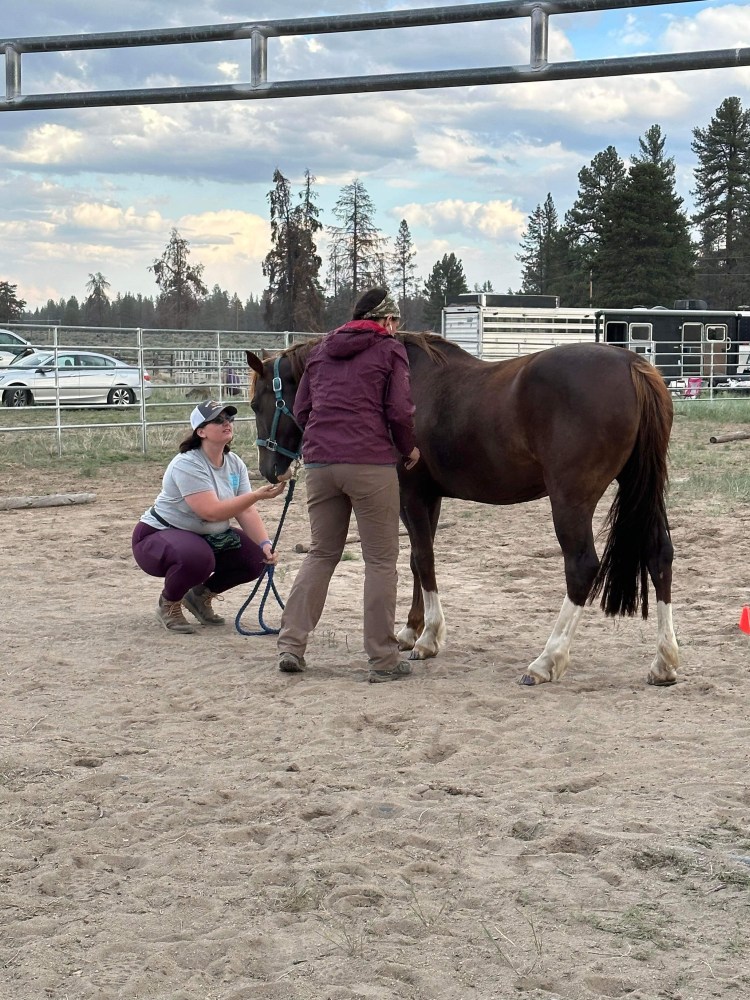
Let’s turn our pens towards the annual signs of autumn: The ponies start getting their soft winter fuzzies on, the sun ditches us before 8pm, you have to return to keeping an extra layer in the truck, and…the AERC page starts to get rambunctious again. All ride season long, most folks are busy clearing trails, driving to rides, following Tevis fever, agonizing over keeping their horses sound and conditioned, so our corner of social media gets a bit of a breather aside from gorgeous ride photos. However, like clockwork, being farm bound for the winter gets endurance rider’s fingers itchy to share their opinions, and if we can’t do it around a ride camp fire with a drink in our hands, we’ll take to the AERC Facebook page instead. I say all this a bit in jest, but quite a bit of good discussion can occur there. Endurance riding brings out the strongest of personalities, you have to be to take care of a 1000 pound animal with their own views of the world over miles and hours of trail.

The latest thread to snag my eye was on the future of endurance and how to grow the sport, in a time it is rapidly contracting. Sharing that post to my own page racked up 68 comments, perhaps the most I’ve ever gotten, and the original thread is 450+. In order to put this post together, I used a bit of code I found on Reddit to copy all the comments to a Word document (cause FB sucks for reading comments this way), then edited it down from 200 odd pages to 60 odd (some comments were duplicated multiple times due to the weird rando code I used), tossed this doc into ChatGPT (legit the first time I’ve used it), and it spit out these top 10 categories of concern:
- High costs and economy
- Time commitment and accessibility
- Lack of marketing and awareness
- Spectator and engagement challenge (can be combined a bit with the above)
- Barriers for beginners
- Youth involvement is weak
- Trail and venue access
- Community culture and division
- Identity crisis: Tradition versus moderation (can be combined a bit with the above)
- Declining ride managers, vets, and volunteers
Before I dive into each of the these points below, let me give you a bit about me so you’ll know what my perspective is formed by. I consider myself an “average” endurance rider: I started as a catch rider over 10 years ago, riding other folk’s spare horses as I had babysitters to watch my son for. I was able to work my way up to leasing a horse for one ride a week, then accepted an older Appendix gelding whose teen had moved on to other interests who I unfortunately lost a couple of years later. I purchased my current mare as a green, previously feral broodmare and have been bringing her into the sport myself, with the guidance of friends, trusted mentors, and never ending self-education. We’ve hit our official 250 endurance miles with a handful of LDs and intro miles and the requisite hundreds of training miles and hours of obsessing over tack fit, farrier care, body work and supplements and more behind those, and now we’re setting our sights on Tevis.
I’ve been a member of AERC (Member #M45121) and my local organization, PNER, for several years off and on. I currently prepare the newsletter for PNER, I always carry a folding saw and hand clippers in my saddle bags, I volunteer at rides every year and my son has been coming to ride camps since he was a toddler. My day job informs so much of how I look at the world, supporting safety means digging for root causes and proposing data driven solutions and responses. I also care deeply about any given sport’s social license to operate, which is a concern for any horse sport these days that we have to keep in mind when making decisions for the next 10 to 20 years.

Of those top 10 issues above, the one that’s hardest for any organization to manage directly is cost. Wherever you fall on the political spectrum, most folks agree life is expensive as hell. Those without two labor based incomes to support a household struggle just to keep their heads above water, let alone maintain an endurance horse. It can be done, several of my close friends fit this category, but it’s a sight harder than it ever used to be. As many folks in that thread mentioned, the costs of every single thing that goes into supporting this endurance habit has skyrocketed: Mortgages (if you own your property) or board if you don’t (like me); hay and feed; veterinary care; farrier care; trucks and fuel and insurance of all stripes. Ride manager costs have kept pace; permits and insurance, awards and vets, convincing volunteers to commit and show up. Ride fees and organization membership fees have not kept pace with the reality of putting on rides and maintaining the organization, let alone efforts to set the sport up for success for the next few decades. When facing the choice between dedicated four days to an endurance ride (between packing, arranging care while you’re away, travel, competing and after care, I’ve never spent less than four days of effort on even an intro ride) or a couple of hours to haul to a local barrel race where you could potentially win some cash and be home by midnight, that choice is a no brainer for a lot of folks.
The next few issues are within an organization’s purview to address, whether through direct efforts or culture change. The very first thing I’ll mention here might get a lot of ya’lls ganders up, but stick with me here: People have to feel welcomed and safe at endurance rides. Every single ride camp I’ve been to (bar one) have been in an incredibly isolated locations, where the only folks for miles around are the ones in camp. Driving to my first endurance camp was one hell of a leap: It was a 6 hour drive away through rural Eastern Washington, to meet folks I’d only met online who had offered me their spare Arabian for the LD, and they were the only ones I “knew” there. I’m known among my friends as brave and steady but that’s a leap a lot of folks are intimidated by. I’ve shown up at rides to volunteer where I knew nobody, and 90% of the time this has worked out fine. The other 10% everything was just too busy for me to fit into well, especially before I understood the sport, so I just went home. Contrast that with me 12 years later, stethoscope and pen at the ready, cooling horses and taking pulses like a boss at the National Championships last year. But it took time and ready mentors and space to learn what’s needed and to build the confidence to do so. Inclusion isn’t just about the basic “yeah sure, everyone can come!” attitude, there also has to be work and effort behind it. This is directly something AERC is not doing well at. As a parent, I’m researching Safe Sport and while that whole organization needs some work too, the intent behind it, protecting youth, is a worthy endeavor. As a daughter of a lesbian couple, friends to countless folks under the LBGTQ2+ umbrella, I’m sad to report that endurance is not always a safe a place as it could be. Just saying things like “The horse’s don’t care who you love, show up and ride!” doesn’t negate careless, hurtful and outright dangerous camp fire talk that targets any single human’s right to exist. Creating spaces of welcome and inclusion takes work, it takes rules and policies that are enforced and we all get it wrong sometimes…but that just means you keep pecking away at it.
Shifting the focus a bit, the next few points are where the most lively discussion usually comes in, as it’s a no wrong way kind of thing. Our sport does have several built in constraints that have kept it from becoming a more widely known or spectator type sport, some of which might be worth addressing, some of which probably should stay more or less the way they are. We ride long distances, usually isolated, and our sport takes all day, starting before the sun and ending after sundown for the longer distances. Everyone’s pacing is different, ride camps are usually miles from anything else, and the sport overall has been slow to embrace any kind of technology (at least in the US). Just look at me: I’m doing a blog instead of a TikTok about all this! Video is not my medium, and man is that where the youths are. If there’s a will to change any of this, the next closest sport to look at doesn’t involve horses: Ultra running has seen huge growth and support. The reasons are many, but those folks tend to be closest to endurance riders in ethos: Let’s go do hard shit for the sake of doing hard shit.
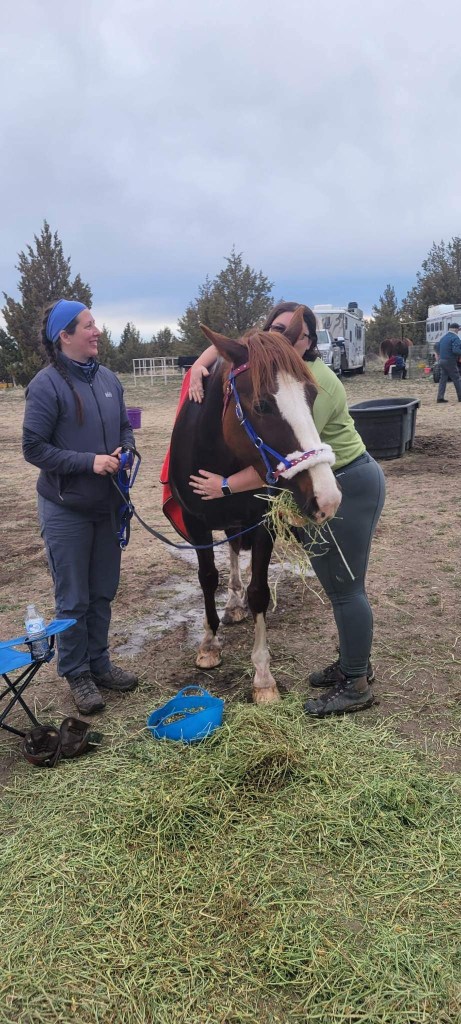
This leads me into the thorniest point: The culture of endurance. I’ve been asked multiple times why I choose endurance, why I keep choosing it, why I try to structure my life around being able to do this hare brained sport. Building a partnership with a horse, that feeling of flying down the trail and laughing together, that moment the vet hands you back your ride card and says, “Your horse looks amazing, you’ve completed!” (even if that’s immediately followed by vomiting, as I did upon completion of my first 50) is absolutely incomparable. All those painstaking hours of horse care, saddle sore miles, adjusting tack fit and swearing over lost boots and arguing over directions with a headstrong mare who is totally convinced you’re just dead wrong, commiserating with friends over stupid horse injuries and truck woes, it’s all worth it when you sit in your trailer, sore and dirty and exhausted, listening to your horse munch on their hay and take a well deserved roll.
I wouldn’t still be an endurance rider if those moments were not supported by the entire culture. That we claim we “ride for a t-shirt” and we have no cash prizes has led me to feel that endurance can be the leading horse sport in regards to SLO. The issues other horse sports face, those of specialized breeding, dumping of thousands of horses, and outright abuses have largely been kept out of endurance. There are always those edge cases who think asking horses to do anything strenuous is unethical, but it’s not those people we have to address; it’s folks like my husband, who loves going to the rodeo with me every year but winces at the calf tie down roping, or the dressage rider who thinks asking a horse to go 25 miles in six hours is nuts. I can open my current copy of Endurance News and view the results of the random drug testing program and in depth investigations into any complaints or rule violations. It’s imperfect but it exists and it’s available and out there. There was an incident in my region two years ago now that caused a lot of grief and left a bad taste in a lot of people’s mouths, but it was handled within the rules…and a lot in the court of public opinion.
One of the best aspects of endurance, in my experience, is the generosity of most folks. I was brought into this sport through that generosity, I’ve been able to toss my mare on friend’s trailers when my truck broke down (and offered mine in turn), had friends show up at the drop of a hat for one of the worst moments in my life, had my son offered good solid horses to ride (and watched him while I rode when he was younger), offered tack to replace someone’s broken gear mid-ride, given up completions to help hunt for a loose horse that tossed their rider, stayed up til 2am to see the 100 milers out on their last loop, pulled ribbons (actually my favorite job), and countless other moments small and large I’ve heard of. We have our catty moments, our deeply held convictions and opinions, and folks who could be a bit more flexible and understanding…but when shit hits the fan, my first call is usually an endurance rider.
This post is getting a bit wordy, even for me, so I’ll address the remaining points later this week. Hopefully this keeps the conversation going, but moving forward instead of just restating a bunch of things. I do firmly believe endurance can thrive into the future, but it will take some concentrated work and effort on multiple fronts to do so. My next post will be a final overview of the issues and then on to some solutions or proposed suggestions, including ones I personally can work on (or I already am!) Until then, happy trails all!

 On the loose
Yep, the only recruitment I’ve been able to accomplish has been by actually putting butts in saddles & having them ride with me! (I’ve sponsored as many juniors as I can over the years)
Otherwise it’s pretty boring, just hanging out in camp & waiting for your participant to come off trail!
LikeLiked by 1 person